Size Guide
Find the perfect gaylord box size for your application. All dimensions are Length x Width x Height in inches.
Pro Tip: The most common size is 48x40x48, designed to fit standard 48x40 GMA pallets used throughout North America.
Need a Custom Size?
We can source or modify boxes to your specifications.
Complete Size Chart
All dimensions in inches (L x W x H). Weight capacities vary by wall type and condition.
| Size (L x W x H) | Volume | Pallet Type | Box Weight | Single Wall | Double Wall | Triple Wall | Applications |
|---|---|---|---|---|---|---|---|
48 x 40 x 48POPULAR 1.51 m³ | 53.3 cu ft | 48x40 Standard GMA | 35 lbs | 600-800 lbs | 1,200-1,500 lbs | 2,000-2,500 lbs | E-commerce, recycling, general warehouse |
48 x 40 x 36POPULAR 1.13 m³ | 40 cu ft | 48x40 Standard GMA | 30 lbs | 500-700 lbs | 1,000-1,300 lbs | 1,800-2,200 lbs | Retail, textiles, lighter materials |
48 x 40 x 24 0.76 m³ | 26.7 cu ft | 48x40 Standard GMA | 25 lbs | 400-600 lbs | 800-1,100 lbs | 1,500-1,900 lbs | Low-profile storage, shipping docks |
48 x 45 x 48 1.70 m³ | 60 cu ft | 48x45 Automotive | 40 lbs | 700-900 lbs | 1,300-1,600 lbs | 2,200-2,700 lbs | Automotive parts, manufacturing |
48 x 48 x 48 1.81 m³ | 64 cu ft | 48x48 Square | 42 lbs | 700-900 lbs | 1,400-1,700 lbs | 2,300-2,800 lbs | Food service, bulk materials |
48 x 40 x 60 1.89 m³ | 66.7 cu ft | 48x40 Standard GMA | 45 lbs | 800-1,000 lbs | 1,500-1,800 lbs | 2,500-3,000 lbs | Large volume items, bulky goods |
40 x 32 x 24 0.50 m³ | 17.8 cu ft | 40x32 Small | 20 lbs | 300-500 lbs | 600-900 lbs | 1,200-1,500 lbs | Small parts, electronics |
44 x 44 x 44 1.39 m³ | 49.1 cu ft | 44x44 Square | 38 lbs | 600-800 lbs | 1,200-1,500 lbs | 2,000-2,400 lbs | Drums, square pallets |
48 x 40 x 42 1.32 m³ | 46.7 cu ft | 48x40 Standard GMA | 32 lbs | 550-750 lbs | 1,100-1,400 lbs | 1,900-2,300 lbs | Mid-height storage, mixed goods |
48 x 42 x 48 1.59 m³ | 56 cu ft | 48x42 Euro | 37 lbs | 650-850 lbs | 1,250-1,550 lbs | 2,100-2,600 lbs | European markets, exports |
(L × W × H) ÷ 1,728 = cu ft1 cu ft = 0.0283 m³Wall Types & Weight Capacity
Understanding wall construction is critical for selecting the right box for your weight requirements.
Single Wall
- Thickness
- 3/16" (4.8mm)
- Weight Capacity
- 300-1,000 lbs
- Burst Strength
- 200-275 lbs/sq in
- Edge Crush (ECT)
- 32 ECT
- Reusability
- 1-3 uses
- Cost Factor
- $
- Best For:
- Light goods, one-time use, non-stacking
Double Wall
- Thickness
- 3/8" (9.5mm)
- Weight Capacity
- 600-1,800 lbs
- Burst Strength
- 350-500 lbs/sq in
- Edge Crush (ECT)
- 48-51 ECT
- Reusability
- 3-10 uses
- Cost Factor
- $$
- Best For:
- Standard applications, moderate stacking, reuse
Triple Wall
- Thickness
- 1/2" (12.7mm)
- Weight Capacity
- 1,200-3,000 lbs
- Burst Strength
- 500-900 lbs/sq in
- Edge Crush (ECT)
- 71-90 ECT
- Reusability
- 5-15 uses
- Cost Factor
- $$$
- Best For:
- Heavy loads, high stacking, demanding use
Weight Capacity Quick Guide
By Product Type:
- Paper/Textiles: 300-800 lbs (Single/Double Wall)
- Plastics/Electronics: 500-1,200 lbs (Double Wall)
- Food Products: 800-1,500 lbs (Double Wall)
- Metal Parts: 1,200-2,500+ lbs (Triple Wall)
Safety Margins:
- Add 20-30% safety margin to your maximum expected weight
- Used boxes: Reduce capacity by 10-30% depending on grade
- Stacking: Bottom box must support all boxes above it
- Humid environments: Reduce capacity by 15-25%
How to Measure Boxes Correctly
Accurate measurements ensure proper pallet fit and prevent costly ordering mistakes.
Step-by-Step Measuring
Length (L)
Measure the longest side of the box opening from inside edge to inside edge (front to back)
Tip: Use a metal measuring tape for accuracy
Width (W)
Measure the shorter side of the box opening from inside edge to inside edge (side to side)
Tip: Width is typically 40" for standard GMA pallets
Height (H)
Measure from the inside bottom of the box to the top of the walls, not including flaps
Tip: Measure at the center, not at corners where it may be compressed
Common Measuring Mistakes
- Measuring outside dimensions instead of inside
- Including flap height in the total height measurement
- Measuring a compressed or damaged corner
- Rounding measurements up or down significantly
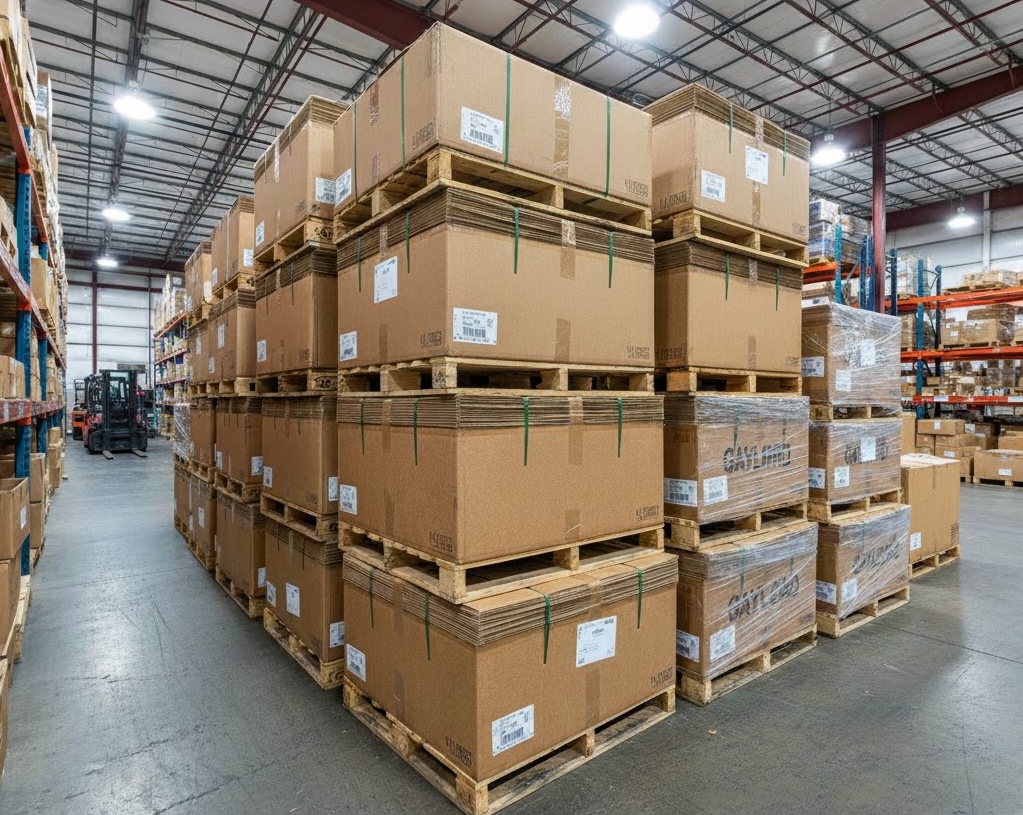
Inside vs Outside Dimensions
Our sizes refer to inside dimensions (ID) - the usable space inside the box. Outside dimensions (OD) will be larger depending on wall thickness.
Quick Measurement Tools
- Metal Measuring Tape: Most accurate for all dimensions
- Yard Stick: Good for straight-line measurements
- Laser Measure: Fast but may be less accurate on cardboard
Volume Calculations
Understanding box volume helps optimize storage space and shipping costs.
Volume Formula
(L × W × H) ÷ 1,728 = cu ft(L × W × H) ÷ 1,000,000 = m³Example Calculations:
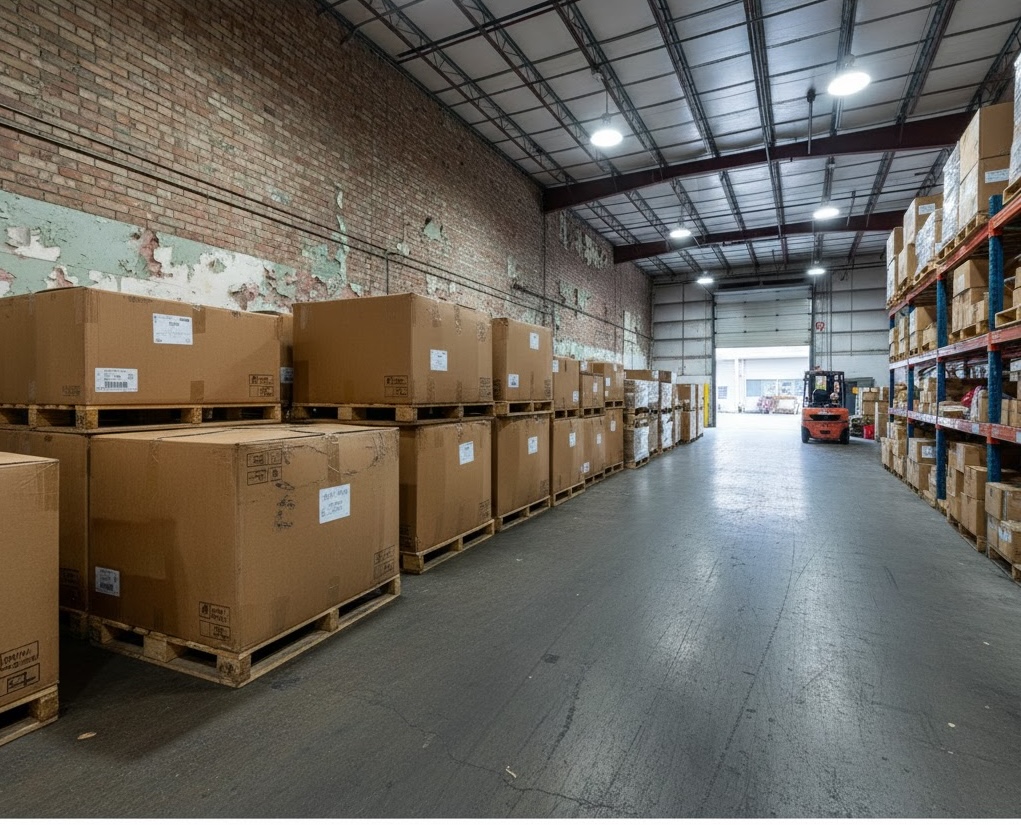
Practical Volume Uses
Quick Reference
Pallet Compatibility
Matching your gaylord box to the right pallet ensures stability, efficient space usage, and safe transport.
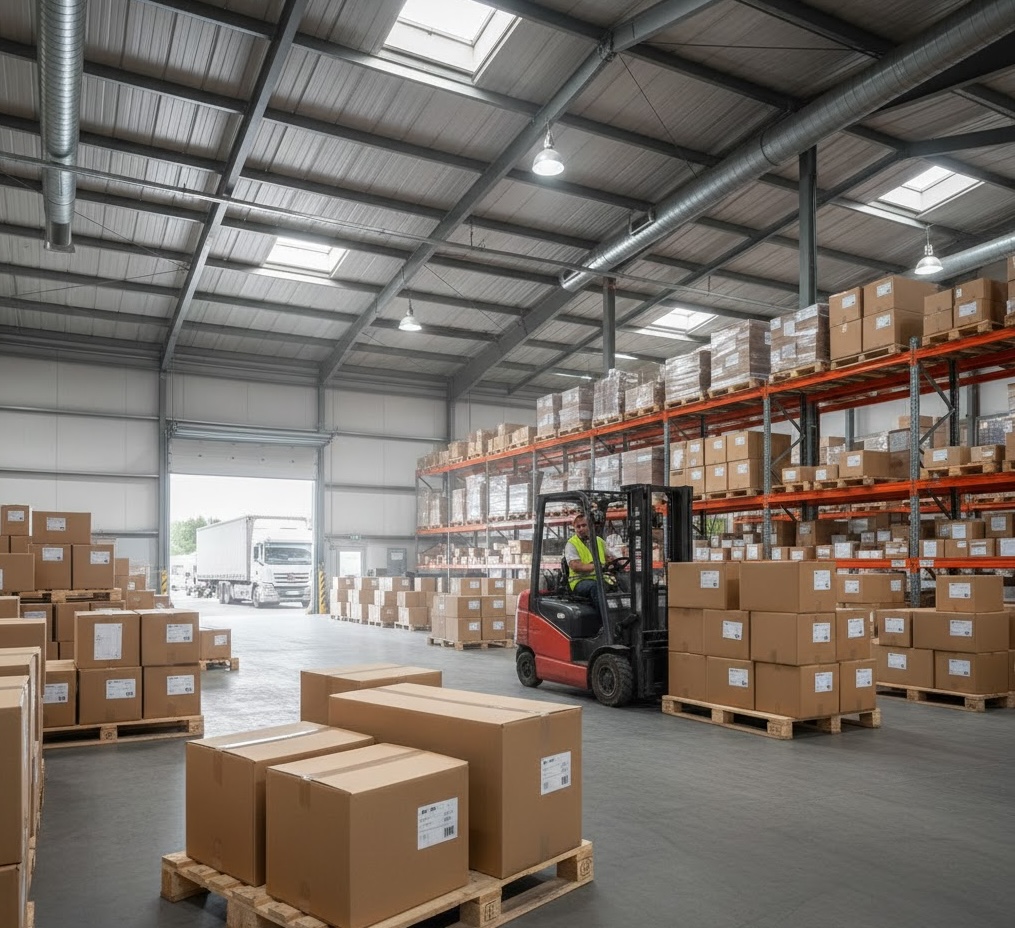
GMA Pallet (48x40)
- Dimensions
- 48" x 40"
- Market Share
- ~80% of US pallets
- Compatible Boxes
- 48 x 40 x 4848 x 40 x 3648 x 40 x 2448 x 40 x 6048 x 40 x 42
- Industries
- General retail, grocery, consumer goods
- Truck Loading
- 24 pallets (2 rows of 12)
European Euro Pallet
- Dimensions
- 48" x 42"
- Market Share
- European standard
- Compatible Boxes
- 48 x 42 x 48
- Industries
- International shipping, exports
- Truck Loading
- 22 pallets
Automotive Pallet
- Dimensions
- 48" x 45"
- Market Share
- Automotive industry
- Compatible Boxes
- 48 x 45 x 48
- Industries
- Auto parts, manufacturing
- Truck Loading
- 20-22 pallets
Square Pallet (48x48)
- Dimensions
- 48" x 48"
- Market Share
- Food service, drums
- Compatible Boxes
- 48 x 48 x 48
- Industries
- Food service, chemical drums
- Truck Loading
- 20 pallets
Small Pallet (40x32)
- Dimensions
- 40" x 32"
- Market Share
- Small parts, retail
- Compatible Boxes
- 40 x 32 x 24
- Industries
- Electronics, small goods
- Truck Loading
- 36 pallets
Square Pallet (44x44)
- Dimensions
- 44" x 44"
- Market Share
- Drums, specialty
- Compatible Boxes
- 44 x 44 x 44
- Industries
- Chemical drums, specialty
- Truck Loading
- 24 pallets
Pallet Fit Guidelines
Perfect Fit (Recommended)
- Box base matches pallet dimensions exactly (±1 inch)
- Maximum stability and safety during transport
- Optimal weight distribution across pallet surface
- Efficient warehouse space utilization
Avoid These Situations
- Box overhangs pallet edges (tipping hazard)
- Box is significantly smaller than pallet (wasted space)
- Mixing different pallet sizes in same warehouse area
- Using non-standard pallets without proper planning
Size Recommendations by Industry
Different industries have unique requirements. Here are our expert recommendations based on typical use cases.
E-commerce & Retail
- Recommended Sizes:
- 48 x 40 x 4848 x 40 x 36
- Wall Type:
- Double Wall
- Typical Capacity:
- 800-1,200 lbs
- Why This Works:
- High turnover, standard pallet compatibility, good reusability for returns
Manufacturing
- Recommended Sizes:
- 48 x 45 x 4848 x 40 x 48
- Wall Type:
- Double/Triple Wall
- Typical Capacity:
- 1,200-2,500 lbs
- Why This Works:
- Heavy parts, automotive compatibility, durability for production lines
Food & Beverage
- Recommended Sizes:
- 48 x 48 x 4848 x 40 x 48
- Wall Type:
- Double Wall
- Typical Capacity:
- 800-1,500 lbs
- Why This Works:
- Bulk ingredients, regulatory compliance, moisture resistance needed
Recycling & Waste
- Recommended Sizes:
- 48 x 40 x 4848 x 40 x 60
- Wall Type:
- Single/Double Wall
- Typical Capacity:
- 400-1,000 lbs
- Why This Works:
- High volume collection, cost-effective, standard pallet systems
Electronics
- Recommended Sizes:
- 40 x 32 x 2448 x 40 x 36
- Wall Type:
- Double Wall
- Typical Capacity:
- 500-900 lbs
- Why This Works:
- Smaller parts, protective packaging, controlled environment storage
Textiles & Apparel
- Recommended Sizes:
- 48 x 40 x 3648 x 40 x 48
- Wall Type:
- Single/Double Wall
- Typical Capacity:
- 300-800 lbs
- Why This Works:
- Lightweight goods, volume over weight, frequent handling
Pharmaceuticals
- Recommended Sizes:
- 44 x 44 x 4448 x 40 x 36
- Wall Type:
- Double/Triple Wall
- Typical Capacity:
- 700-1,500 lbs
- Why This Works:
- Clean environment, precise dimensions, regulatory compliance
Automotive Parts
- Recommended Sizes:
- 48 x 45 x 4848 x 40 x 48
- Wall Type:
- Triple Wall
- Typical Capacity:
- 1,500-2,500 lbs
- Why This Works:
- Heavy metal parts, automotive pallet standard, high durability
Don't see your industry? Contact us for personalized recommendations based on your specific needs.
Stacking Guidelines
Proper stacking maximizes warehouse space while ensuring safety and product integrity.
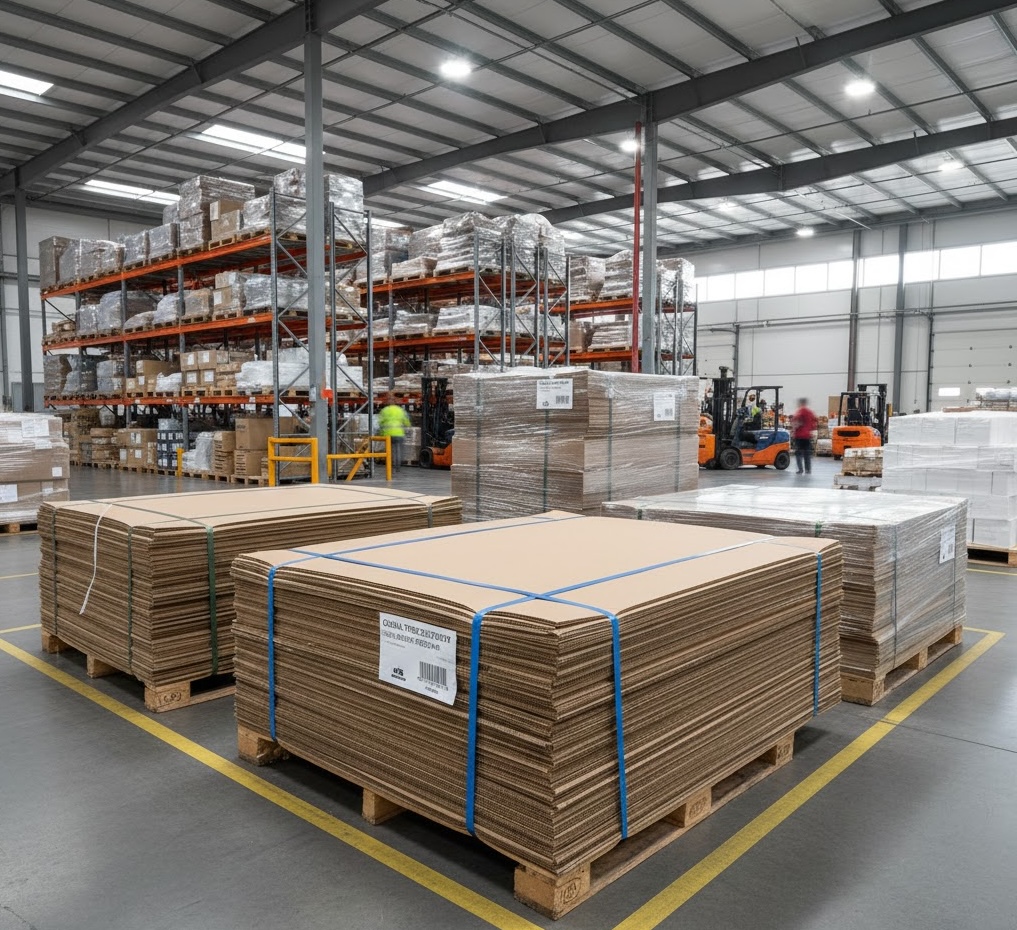
Safe Stacking Heights
Stacking Best Practices
Safety Warnings
- !Never exceed manufacturer-rated weight capacity
- !Don't stack boxes higher than forklift reach height
- !Reduce stacking height if floors are uneven or sloped
- !Used boxes: reduce stack height by 1-2 boxes depending on grade
Stacking Capacity Calculator
~2,000-2,500 lbs total
~4,000-5,000 lbs total
~10,000-12,000 lbs total
Storage Space Calculations
Plan your warehouse layout and maximize storage efficiency with these calculations.
Floor Space Requirements
(L × W) ÷ 144 = sq ft per boxCommon Box Footprints:
Warehouse Efficiency Factors
Vertical Storage Optimization
Quick Capacity Estimator
| Warehouse Size | Usable Space (70%) | 48×40 Boxes (1 high) | Stacked 3 High |
|---|---|---|---|
| 1,000 sq ft | 700 sq ft | ~52 boxes | ~156 boxes |
| 2,500 sq ft | 1,750 sq ft | ~131 boxes | ~393 boxes |
| 5,000 sq ft | 3,500 sq ft | ~263 boxes | ~789 boxes |
| 10,000 sq ft | 7,000 sq ft | ~526 boxes | ~1,578 boxes |
| 20,000 sq ft | 14,000 sq ft | ~1,052 boxes | ~3,156 boxes |
Standard vs Custom Sizes
Understanding when to use standard sizes versus custom solutions can save you time and money.
Standard Sizes
Advantages:
- Immediately Available: Stock items ship within 1-3 business days
- Lower Cost: 30-60% less expensive than custom sizes
- No Minimums: Order as few as 5-10 boxes (used) or 50+ (new)
- Pallet Compatible: Fits standard 48×40 GMA pallets
- Easy Resale: High demand for used standard sizes
- Flexibility: Works for 80% of applications
Best For:
- General warehouse operations
- Startups and small businesses
- Variable or seasonal needs
- Quick turnaround requirements
Custom Sizes
Advantages:
- Perfect Fit: Exact dimensions for your specific needs
- Space Optimization: Maximize storage efficiency
- Custom Features: Add handles, labels, coatings, etc.
- Branding: Custom printing and colors available
- Unique Pallets: Match non-standard pallet sizes
- Specialty Materials: Moisture-resistant, food-grade, etc.
Considerations:
- Lead Time: 6-12 weeks for new manufacturing
- Minimum Orders: Typically 500-1,000+ units for manufacturing
- Higher Cost: 30-60% premium over standard sizes
- Limited Resale: Harder to resell custom dimensions
Best For:
- Large-scale operations (500+ boxes/year)
- Unique pallet or rack systems
- Specialty product requirements
- Brand differentiation needs
Need Help Deciding?
Our team can help you determine whether standard or custom sizes are right for your application. We'll analyze your needs, volume, timeline, and budget to recommend the best solution.
Get Expert AdviceFrequently Asked Questions
Common questions about gaylord box sizes and specifications.
What is the most common gaylord box size?
How do I calculate the volume of a gaylord box?
Can I stack gaylord boxes when they are full?
What weight capacity should I choose?
Do you measure inside or outside dimensions?
How many gaylord boxes fit on a truck?
Can I get custom sizes?
What is the difference between new and used boxes?
How long can I store items in a gaylord box?
What size should I use for my warehouse?
How do I prevent boxes from bulging?
Are gaylord boxes recyclable?
Have a question not answered here? Contact our team - we're here to help!
Can't Find Your Size?
Contact us - we can source custom sizes or modify existing boxes to meet your needs.
Contact UsFrequently Asked Questions
Answers about measuring, capacity, and selecting the right gaylord box dimensions.
How do I measure a gaylord box correctly?
Measure interior length, width, and height in inches; note wall type and whether a lid or liner is needed.
What are standard gaylord dimensions?
48x40 footprints are common with heights from 36-60 inches. We can share current height options.
How much weight can a box hold?
Capacity depends on wall type and condition. We'll recommend a grade and wall configuration for your weight.
How many boxes fit on a truck?
Counts vary by height and nesting. We'll estimate pallet and truckload quantities for your chosen size.
Do you provide lids or slipsheets for certain sizes?
Yes. We can include lids and slipsheets that match your selected box dimensions.
What size works best for loose materials?
Taller triple-wall boxes with liners are common for lightweight, loose product. We'll tailor to your material.
How do I choose height for my racks or trailers?
Share rack clearances or trailer dimensions and we'll suggest heights that maximize capacity safely.
Can boxes be cut down to size?
Yes. We can advise on safe cut-down methods or provide pre-cut options when available.
Do you help with volume calculations?
We calculate cubic footage and can estimate how many units fit your storage or freight plan.
What if my product is oddly shaped?
We'll recommend dimensions and liners that accommodate irregular shapes while protecting the contents.